I didn't blog last week due to it being Christmas, but now the festive season is almost out of the way, let me tell you how I got on.
Last week (week 15), as you can imagine I had a few "Celebration Meals" Christmas Day being the worst for eating the wrong foods. However I tried not to go too mad. Christmas breakfast was 2 homemade chocolate chip cookies, dinner was a pate starter with 3 x small french toasts, the main meal was turkey, roast potatoes, sprouts, parsnip, stuffing, cranberry sauce, gravy & dessert was a chocolate cupcake, followed by a meringue roulade & later followed by a bit of chocolate log.
On Boxing Day I went to my sisters house for a buffet tea, but I deliberately ate my Dukan friendly shepherds pie before going and that pretty much did the trick. The only thing I ate at my sisters was a cherry bakewell & small chocolate mini roll.
On Thursday I had a protein only day and the rest of the week I mostly followed my Dukan consolidation plan.
All in all I don't think I did too bad.
Weight: 8st 12.5lbs (still under my goal weight of 8st 13lbs)
My OH has ok, but he does like his alcohol and that was too hard for him to resist over Christmas, however he had the same "P" only day as me and ended up this morning as the same weight as last Monday. Which considering he actually gained 1lb during the week, was pretty good. No loss but no gain.
Today being NYE will be tough, as it's usually the day I choose to do Protein only and so far I have but I know tonight things might change. I've cooked some sausage rolls which I will find tough to resist but I have got in a prawn platter as well which is protein, so my OH should be happy. Think the Pringles will be too much to resist, but once today & New Years Day are out of the way it will be full ahead with Dukan plan.
Monday, 31 December 2012
Monday, 17 December 2012
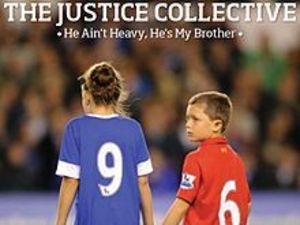
JFT96: He Aint Heavy ... He's My Brother
Please help raise the funds needed to continue the fight for justice. This is a cause very close to my heart and chokes me up whenever I think about what happened.
For over 23 years the bereaved families & fans have had to live with the lies broadcast around the world, that Liverpool fans were drunk, had charged the gates to get in, had arrived without tickets, were urinating on the dead, were pick-pocketing the dead. For 23 years some people (not all) have hated Liverpool fans for the things the media spouted that they'd done - THE TRUTH - so it said on the front page of a disgusting national newspaper.
Liverpool fans have lived with abuse from others, whilst all they time they fought for the truth to come out, they fought for justice.
The truth has finally come out, the police lied to protect themselves, the media lied to sell papers, MP's lied to cover it up, police & paramedics were told to change their statements to shift any wrong-doings from themselves.
Download the single He Aint Heavy He's My Brother, all proceeds from the single will go to the families fight for justice.
ORDER THE SINGLE NOW!
iTunes: http://bit.ly/jft96itunes
7 Digital: http://bit.ly/jft96-7digital
HMV: http://bit.ly/jft96CD
Amazon: http://amzn.to/SjOLhC
Sainsbury: http://bit.ly/jft96sainsburys
Mel C's Store: http://melaniec.tmstor.es/
Townsend Music: http://bit.ly/jft96townsend
For over 23 years the bereaved families & fans have had to live with the lies broadcast around the world, that Liverpool fans were drunk, had charged the gates to get in, had arrived without tickets, were urinating on the dead, were pick-pocketing the dead. For 23 years some people (not all) have hated Liverpool fans for the things the media spouted that they'd done - THE TRUTH - so it said on the front page of a disgusting national newspaper.
IT WAS ALL LIES
Liverpool fans have lived with abuse from others, whilst all they time they fought for the truth to come out, they fought for justice.
The truth has finally come out, the police lied to protect themselves, the media lied to sell papers, MP's lied to cover it up, police & paramedics were told to change their statements to shift any wrong-doings from themselves.
The fight for justice is almost over.
Download the single He Aint Heavy He's My Brother, all proceeds from the single will go to the families fight for justice.
ORDER THE SINGLE NOW!
iTunes: http://bit.ly/jft96itunes
7 Digital: http://bit.ly/jft96-7digital
HMV: http://bit.ly/jft96CD
Amazon: http://amzn.to/SjOLhC
Sainsbury: http://bit.ly/jft96sainsburys
Mel C's Store: http://melaniec.tmstor.es/
Townsend Music: http://bit.ly/jft96townsend
My Diet, Week 14 - Concolidation Countdown
Well this has been a funny week.
Over the few weeks I've been on the Consolidation Phase of the Dukan Diet, I have felt really ill the day after (or on one occasion day & half) having a celebration meal. I put this down to adding different foods back into my diet. However on Friday morning, whilst eating breakfast I became very ill again. I looked back over my weekly menus and discovered that over the last few weeks (although after a celebration meal) the breakfast I've eaten on the day of illness has been the same, oat bran porridge. So I came to the conclusion that my body is becoming intolerant to oat bran. I thought I was only having a bad reaction when the oat bran was eaten in porridge form, I've tried pancakes yesterday and this morning and I'm not as bad although not right, and the reaction time is not instant as with porridge. My tummy doesn't feel right, gurgling quite a bit & I feel like I need to drink lots of water to dilute the effect it is having on me, but I'll have to cope with that, I have to work within the hour. I was going to try porridge again to be certain but I think the effect the pancakes are having on me is enough of a confirmation. (if its not oat bran I have a problem with, then it's dairy)
Apart from the ill feeling this week, I have been a bit of a pig.
On Monday I went to lunch with my daughters and had sweet chilli chicken wrap & battered onion rings (was fab). I also finished off my box of fudge & box of chocolate truffles, which I did share...a bit. On Friday I had Chicken Strippers & Potato Wedges combo from Domino's pizza for my lunch (celebration meal) however I also had a chicken wrap with garlic mayo & chips for my dinner. (oops) On Saturday I went to a young man's (6yrs) birthday tea party and ate a few sausage rolls, gingerbread men, party ring biscuits, a few pringles and 2 slices of the most delicious chocolate cake, Mmmmmmmm, my mouth is watering just thinking about it.
My protein only day was Tuesday which I stuck to. On Wednesday I had a late lunch of shepherds pie with butternut squash mash, which was so filling that I didn't actually have a dinner. Sunday was a PV day which I stuck to (although I did have a tiny bit of chocolate).
All in all, how have I done weight wise this week?
Weight: 8st 10lbs
Weight Lost: .25lbs
Total Weight Loss: 1st 11lbs
Goal Weight: 8st 13lbs (although wouldn't mind being 8st 7lbs)
So still a quarter pound loss, which is amazing, however I did weigh myself towards the end of the week at one point the scales said 8st 13lbs, so it just goes to show, even with a total lapse in the diet, getting back on track for a couple of days brings the weight back down. Good to know, with Christmas around the corner.
I actually have no celebration meals planned this week yet, but if someone asks me to lunch at least I know I can say yes.
Over the few weeks I've been on the Consolidation Phase of the Dukan Diet, I have felt really ill the day after (or on one occasion day & half) having a celebration meal. I put this down to adding different foods back into my diet. However on Friday morning, whilst eating breakfast I became very ill again. I looked back over my weekly menus and discovered that over the last few weeks (although after a celebration meal) the breakfast I've eaten on the day of illness has been the same, oat bran porridge. So I came to the conclusion that my body is becoming intolerant to oat bran. I thought I was only having a bad reaction when the oat bran was eaten in porridge form, I've tried pancakes yesterday and this morning and I'm not as bad although not right, and the reaction time is not instant as with porridge. My tummy doesn't feel right, gurgling quite a bit & I feel like I need to drink lots of water to dilute the effect it is having on me, but I'll have to cope with that, I have to work within the hour. I was going to try porridge again to be certain but I think the effect the pancakes are having on me is enough of a confirmation. (if its not oat bran I have a problem with, then it's dairy)
Apart from the ill feeling this week, I have been a bit of a pig.
On Monday I went to lunch with my daughters and had sweet chilli chicken wrap & battered onion rings (was fab). I also finished off my box of fudge & box of chocolate truffles, which I did share...a bit. On Friday I had Chicken Strippers & Potato Wedges combo from Domino's pizza for my lunch (celebration meal) however I also had a chicken wrap with garlic mayo & chips for my dinner. (oops) On Saturday I went to a young man's (6yrs) birthday tea party and ate a few sausage rolls, gingerbread men, party ring biscuits, a few pringles and 2 slices of the most delicious chocolate cake, Mmmmmmmm, my mouth is watering just thinking about it.
My protein only day was Tuesday which I stuck to. On Wednesday I had a late lunch of shepherds pie with butternut squash mash, which was so filling that I didn't actually have a dinner. Sunday was a PV day which I stuck to (although I did have a tiny bit of chocolate).
All in all, how have I done weight wise this week?
Weight: 8st 10lbs
Weight Lost: .25lbs
Total Weight Loss: 1st 11lbs
Goal Weight: 8st 13lbs (although wouldn't mind being 8st 7lbs)
So still a quarter pound loss, which is amazing, however I did weigh myself towards the end of the week at one point the scales said 8st 13lbs, so it just goes to show, even with a total lapse in the diet, getting back on track for a couple of days brings the weight back down. Good to know, with Christmas around the corner.
I actually have no celebration meals planned this week yet, but if someone asks me to lunch at least I know I can say yes.
Tuesday, 11 December 2012
Guest Blog: Joanna Lumley meets the Dalai Lama
My guest blog today is to help bring to attention the plight of Tibet, invaded by China in 1949, in trying to free themselves from the repression of Chinese rule.
By Kate Saunders
The Times, UK
Wednesday, May 19, 2004
It is a hot and dusty afternoon, and tempers are frayed at the Foreigners
Booking Office in New Delhi railway station. My travelling companion,
British actress Joanna Lumley, and I have left our passports in the hotel -
a bone-jolting hour's auto-rickshaw ride away - and are told that it is
impossible to buy tickets for our train as a result. The bespectacled
booking clerk, sitting amidst teetering stacks of brown files under a
whirring fan covered in grime, is unmoved until Joanna takes off her
sunglasses, fixes him with a cool gaze, and breathes, 'Sir, we are so
terribly sorry - is there ANYTHING you can do?' The apology is conveyed in a
tone of such rapturous intimacy that the clerk is immediately spell-bound.
He foregoes bureaucratic procedure to sign a chit to the effect that 'Ms
Lumley will be carrying her passport with her on the train' and issues our
tickets.
For Joanna Lumley, former model and Britain's best-loved comedy actress, our
train that night through the Punjab and into the foothills of the Himalayas
is the beginning of a journey to rediscover her Indian roots - 58-year old
Joanna was born in Srinigar, Kashmir. Our trip to Dharamsala in Himachal
Pradesh, a small town nestling amid pine forests in the shadow of the snow
peaks, is also the fulfilment of a long-held dream for Joanna, because she
is meeting the man known as a 'God King' and revered by millions all over
the world - the Tibetan spiritual leader, the Dalai Lama.
Joanna, who is best-known as the outrageous, champagne-quaffing Patsy in the
hit sit-com Absolutely Fabulous as well as numerous film and TV roles in a
career that spans more than 30 years, uses the profile gained through her
fame and fees from her acting to support more than 40 different charities.
But she is particularly passionate about the Tibetan cause. She explains:
'My grandfather, Captain Leslie Weir, worked for the British government at
the time of the Raj in the Kingdom of Sikkim in the Himalayas, and was close
personal friends with the last Dalai Lama, the 13th. He spoke Tibetan and
studied Buddhism.' Joanna's Stockwell home is adorned by water-colour scenes
of Tibet, including the Dalai Lama's former home the Potala Palace, painted
by her grandmother, who accompanied her husband on his many trips to Tibet,
and were among the first Western visitors to the 'Forbidden City' of Lhasa.
Joanna says: 'When I was growing up, our family home was always full of
oriental artefacts from tea-cups to thangkas (Tibetan religious paintings)
and Buddhas of every kind. So Buddhism to me is not exotic, but deeply
familiar. There was always a sense during my childhood that Tibet was a very
special place, and that our family had a very special relationship with the
Tibetan people. This is one of the reasons why I have always dreamed of
meeting the Dalai Lama - and of presenting him with a very special gift from
my family.'
Joanna, whose new autobiography will be published in October, has drawn upon
the spiritual teachings of the Dalai Lama to help her find a balance in her
life amid conflicting demands from her celebrity, acting roles, charity work
and family.
She says: 'I think the Dalai Lama is a hero simply because he emphasises the
most essential teaching of Buddhism, which is to be kind, and that is rather
an unfashionable subject for world leaders or other religious figures to
talk about these days.'
It is a message that Joanna has clearly taken to heart. Ab Fab's Patsy
doesn't care about anything - but the actress Joanna Lumley cares about
everything, from the plight of pack mules in Egypt and the state of the
earth's environment to the anger of a homeless alcoholic in her local
newsagents in south London a few weeks ago ('I told him, I'll buy you a
packet of fags, but you have to stop being so rude! Of course I didn't buy
him Gitanes, just B & H.')
As our taxi rattles up the steep dusty roads, lined with eucalyptus and past
stalls selling water-melons, brown settees, and Ambassador Whisky, Joanna
talks about her childhood in the Far East. Her father, Captain James Lumley,
was born in Lahore and served on the North-Western Frontier as a Gurkha
officer. Soon after Joanna was born in India, the family moved to Malaya,
which was then at the height of a civil war in which communist guerrillas
were attempting to drive out the British. She remembers her father
disappearing for months into the jungle with his Gurkha troops and
returning, much thinner, and with a long beard. Joanna continued her
education at a school in Hong Kong before being transferred to a convent
school in Sussex together with her sister.
She says: 'I don't remember India as I was so small when we left. But
generations of my family have served in the Indian Army - my great great
grandfather joined the regiment here in 1796. So I have a deep connection to
India. Everything seems familiar here; the dogs barking at night, the sound
of crickets in the garden, a cold glass of nimbu pani, the temple bells. I
used to be so uninterested in my family history. But I think as you get
older you begin to care more. These days I find myself looking more and more
through my grandparents' letters and poring over maps, and reading about the
period to see how it was and how it would have been.'
Joanna's interest in her ancestry coincides with a new generation in her
family - she has just become a grandmother to baby Alice, the daughter of
her photographer son James, who she brought up as a single mother, and his
girlfriend Tessa. 'I babysit whenever I can,' she says. 'Being a grand-mum
is an immense privilege.'
On our arrival in Dharamsala, base of the Tibetan government in exile and
home to approximately 20,000 Tibetan refugees, the Dalai Lama gives
permission for us to attend a rare audience with Tibetans who have recently
arrived in India. His private secretary, Tenzin Taklha, takes Joanna and I
to the Dalai Lama's private quarters, where about 60 Tibetans are clustered
at the spiritual leader's feet and on the steps leading to his rooms beyond
a small sunlit courtyard full of orange and yellow flowers. There are
red-cheeked children in torn jeans and tee-shirts, Tibetan grandmothers in
dusty chubas, crouched low to the ground and clutching their rosary beads,
sturdy nomads with braided hair and turquoise necklaces. Approximately
2-3000 Tibetans make the perilous journey across the Himalayas each year to
escape from the repression of Chinese rule in their homeland and to be in
the presence of the Dalai Lama, whom they regard as the reincarnation of the
Buddha of Compassion.
The Dalai Lama tells the Tibetans to make the most of their opportunity in
exile to learn about the Tibetan Buddhist religion they are not allowed to
practise freely in their homeland. When he finishes speaking, there is
silence, but for the muffled sobs of many of the Tibetans, overwhelmed to be
in the presence of the spiritual leader who has become such a potent symbol
of Tibetan identity and hope over despair. 'I hear there is a former
political prisoner among you,' the Dalai Lama says quietly. A slight, slim
young girl with long black hair, dressed in shabby trousers and a blue
hooded top, stands up, sobbing so hard she can barely speak. 'You have done
something for your people, you have been brave,' the Dalai Lama tells her.
They are words that the young girl, a 29-year old nun called Damchoe, who
was sentenced to six years in one of Tibet's most notorious prisons simply
for shouting 'Long live the Dalai Lama!' in Tibet, will never forget.
Later Joanna and I visit a transit centre run by the Tibetan government in
exile to provide temporary shelter and food for Tibetans who arrive in
exile. Joanna is immediately surrounded by small Tibetan children in a
cramped, shabby dormitory, where mattresses are laid out on the floor and
the sole possessions of the refugees are stored in paper bags and plastic
suitcases somehow carried across the most forbidding mountain ranges in the
world. Joanna talks to a young Tibetan boy who is curled up in a corner,
studying English letters in a tattered notebook. Eighteen-year old Gyaltsen
was caught on his first attempt to escape from Tibet and imprisoned. He was
beaten and tortured, and forced to carry out hard labour. After he was
released, he risked further imprisonment by making the long journey into
exile again - determined to join his parents, who had arrived in safety in
India.
Despite his bleak surroundings, Gyaltsen looks immaculate in a smart,
buttoned-up grey waistcoat and pressed trousers. He tells Joanna: 'Living in
Tibet is like being in a very dark room, with just a glimmering of light
that is the possibility of escape to India. I had to walk towards that
light.' Joanna is moved by his maturity and determination to make something
of his life. While meeting the Dalai Lama is a spiritual and personal quest
for Joanna, she is beginning to learn about the political realities of life
in Tibet.
On the day of our meeting with Tibet's revered leader in exile, Joanna is
nervous. She is wearing a patterned blue silk traditional Tibetan chuba,
held together with a safety pin, and with a striped apron meaning she is a
married woman. 'He's a living God and a Buddha and a political leader. There
is no one else of his stature worldwide. I feel very privileged that he's
agreed to meet me, particularly because I'm not a Tibetan, nor a Buddhist,
nor an exile.' She adds: 'I've brought him some socks, for his visit to
Britain at the end of May. He'll be teaching in Scotland and I thought they
would be protection against the midges - they are burgundy, which is a
respectful colour for a monk, isn't it?'
But Joanna has another more significant gift when we are ushered into a
simple reception room adorned with religious paintings and a gold Buddha at
a shrine, and into the presence of the Dalai Lama, Tenzin Gyatso, whose name
means 'Ocean of Wisdom' in Mongolian. The Dalai Lama gestures for us to sit
on a comfy settee, and Joanna places a package wrapped in maroon patterned
cloth on the table before him. She explains: 'Your Holiness, this is a gift
given to my grandfather by the 13th Dalai Lama, your last incarnation. The
present was given to thank my grandfather for his advice on how to help
Tibet defend itself against China. My grandfather would have been so so sad
about the Chinese invasion of Tibet in 1949 - and so angry that the British
didn't speak out against it, despite the close relationship between the two
countries.'
The Dalai Lama carefully unwraps the gift, a set of handwritten scriptures
on fragile parchment encased by two wood-blocks. He calls for one of the
monks, and says something in Tibetan. The monk soon returns with another set
of scriptures, which the Dalai Lama presents to Joanna. 'I will accept your
gift,' he tells her. 'But in return, I want to give you a present. These are
ancient texts on Buddhism that I would like to present to you in honour of
your forefathers and your parents.' He sits back and laughs, a deep,
familiar laugh, bubbling with joy. Joanna clasps her hands in delight, and
tells him: 'My mother will be over-joyed. It was so important to her that I
gave this gift. It is like closing a circle. I'll always remember this
moment.'
The Dalai Lama may be regarded by millions as a divine being, but he is no
ethereal figure. He has the energy and build of a man much younger than his
68 years. As he and Joanna talk, about Joanna's family, the Dalai Lama's
hopes for the future, politics and religion, they laugh uproariously. When
he takes her hand to lead her across the room for a photograph, his grip is
surprisingly strong. When we leave, he clasps his hands together in the
tradition Tibetan greeting before presenting Joanna with a white silk
Tibetan scarf, a gesture of respect. 'See you again,' he says seriously.
As Joanna stands quietly in the courtyard to collect her thoughts, the next
VIP guest arrives - a tiny, white-haired English woman clutching a vase of
yellow flowers, which she gives to the Dalai Lama, telling him that she
picked them this morning. He engulfs her in a bear hug. Later, we see the
old lady, who wears a Tibetan chuba, slowly making her way up the steep path
home, past the jewellery stands run by exiled Tibetan nomads and the Indian
shops selling spices and SevenUp.
Over dahl and rice in a simple local restaurant, Joanna says: 'This was a
momentous meeting for me. I never dreamed that it would happen. The Dalai
Lama has such a weight of responsibility, such dignity, and yet such
lightness and such joy. In the face of this, everything about my life in
London seems unreal. I would give up my job if I could to do something for
Tibet, for the sake of my grand-father's love of the country. This is what
is real. Acting has always been something I do; it's not what I am. So much
of celebrity is about illusion.
'You know, you think that when you get older you will have your life sorted
out, but that's not been my experience. You have commitments - I have Stevie
(her husband, Stephen Barlow, the orchestral conductor and composer), who I
love more than life itself, my mother Beatrice, who is in her eighties, my
son, my grand-daughter. I'm lucky enough to have earned enough money not to
be under financial pressure, and I turn down most roles I am offered -
sometimes I don't even read the scripts. But there never seems to be enough
time to think, to pause, to stand still, because of the life we get caught
up in. Being here, and meeting His Holiness, puts life in perspective.'
Joanna and I decide to find Damchoe, the young nun singled out by the Dalai
Lama for her courage. A Tibetan friend takes us to the small Tibetan-run Gu
Chu Sum organisation that provides welfare for former political prisoners,
where she is staying. We sit in the sunshine with cups of tea and Damchoe
joins us. She tells us that she was imprisoned when she was in her early
twenties for peaceful political protest. At Drapchi prison in Lhasa, as
punishment for refusing to sing Chinese national songs, she and other nuns
were forced to stand underneath the burning summer sun all day, for days.
She tells us: 'We all became very weak but the guards would kick us if we
fell to the ground. I suffered from terrible headaches; it was like someone
pushing needles into my head. After one day of standing motionless I had a
high fever and fell to the ground unconscious. Later I was taken to be
interrogated and tortured with electric batons. A light sparked from the
baton and it felt as if all my inner organs, my heart, lungs and liver, were
being chopped up.' Because she refused to agree that Tibet would never be
free, Damchoe was put in a solitary confinement cell for several months. She
was given one meal of rice with half-cooked vegetables per day, and no
water. The cell was pitch-black, and she was not allowed any visitors. 'My
family thought that I had died and they performed the appropriate rituals
like the offering of butter-lamps for me,' Damchoe tells Joanna.
Joanna asks her, 'In prison, did any of the guards, ever, show you any
kindness or sympathy?' The young nun, who has only just arrived in exile
after leaving her family in Tibet, is shy, overwhelmed with sadness, and can
scarcely meet Joanna's eyes as she suddenly realises the truth of what she
is about to say. 'No,' she tells Joanna. 'Never.' When Joanna suddenly and
impulsively clutches both her hands in hers, Damchoe looks up at her and
beams, with a sudden flicker of joy at such spontaneous and unaccustomed
human warmth.
I tell Damchoe that Joanna is a well-known actress in the UK and that she
has devoted a lot of her time to the Tibetan cause. Joanna's eyes are full
of tears. 'But compared to this woman,' she says quietly, 'I am nothing.'
Damchoe disagrees. Through our translator, she says: 'Please tell her that
even though she has everything and is happy in her life, she has travelled a
long way to listen to our stories and to share her own. That is really
something.'

The Times, UK
Wednesday, May 19, 2004
It is a hot and dusty afternoon, and tempers are frayed at the Foreigners
Booking Office in New Delhi railway station. My travelling companion,
British actress Joanna Lumley, and I have left our passports in the hotel -
a bone-jolting hour's auto-rickshaw ride away - and are told that it is
impossible to buy tickets for our train as a result. The bespectacled
booking clerk, sitting amidst teetering stacks of brown files under a
whirring fan covered in grime, is unmoved until Joanna takes off her
sunglasses, fixes him with a cool gaze, and breathes, 'Sir, we are so
terribly sorry - is there ANYTHING you can do?' The apology is conveyed in a
tone of such rapturous intimacy that the clerk is immediately spell-bound.
He foregoes bureaucratic procedure to sign a chit to the effect that 'Ms
Lumley will be carrying her passport with her on the train' and issues our
tickets.
For Joanna Lumley, former model and Britain's best-loved comedy actress, our
train that night through the Punjab and into the foothills of the Himalayas
is the beginning of a journey to rediscover her Indian roots - 58-year old
Joanna was born in Srinigar, Kashmir. Our trip to Dharamsala in Himachal
Pradesh, a small town nestling amid pine forests in the shadow of the snow
peaks, is also the fulfilment of a long-held dream for Joanna, because she
is meeting the man known as a 'God King' and revered by millions all over
the world - the Tibetan spiritual leader, the Dalai Lama.
Joanna, who is best-known as the outrageous, champagne-quaffing Patsy in the
hit sit-com Absolutely Fabulous as well as numerous film and TV roles in a
career that spans more than 30 years, uses the profile gained through her
fame and fees from her acting to support more than 40 different charities.
But she is particularly passionate about the Tibetan cause. She explains:
'My grandfather, Captain Leslie Weir, worked for the British government at
the time of the Raj in the Kingdom of Sikkim in the Himalayas, and was close
personal friends with the last Dalai Lama, the 13th. He spoke Tibetan and
studied Buddhism.' Joanna's Stockwell home is adorned by water-colour scenes
of Tibet, including the Dalai Lama's former home the Potala Palace, painted
by her grandmother, who accompanied her husband on his many trips to Tibet,
and were among the first Western visitors to the 'Forbidden City' of Lhasa.
Joanna says: 'When I was growing up, our family home was always full of
oriental artefacts from tea-cups to thangkas (Tibetan religious paintings)
and Buddhas of every kind. So Buddhism to me is not exotic, but deeply
familiar. There was always a sense during my childhood that Tibet was a very
special place, and that our family had a very special relationship with the
Tibetan people. This is one of the reasons why I have always dreamed of
meeting the Dalai Lama - and of presenting him with a very special gift from
my family.'
Joanna, whose new autobiography will be published in October, has drawn upon
the spiritual teachings of the Dalai Lama to help her find a balance in her
life amid conflicting demands from her celebrity, acting roles, charity work
and family.
She says: 'I think the Dalai Lama is a hero simply because he emphasises the
most essential teaching of Buddhism, which is to be kind, and that is rather
an unfashionable subject for world leaders or other religious figures to
talk about these days.'
It is a message that Joanna has clearly taken to heart. Ab Fab's Patsy
doesn't care about anything - but the actress Joanna Lumley cares about
everything, from the plight of pack mules in Egypt and the state of the
earth's environment to the anger of a homeless alcoholic in her local
newsagents in south London a few weeks ago ('I told him, I'll buy you a
packet of fags, but you have to stop being so rude! Of course I didn't buy
him Gitanes, just B & H.')
As our taxi rattles up the steep dusty roads, lined with eucalyptus and past
stalls selling water-melons, brown settees, and Ambassador Whisky, Joanna
talks about her childhood in the Far East. Her father, Captain James Lumley,
was born in Lahore and served on the North-Western Frontier as a Gurkha
officer. Soon after Joanna was born in India, the family moved to Malaya,
which was then at the height of a civil war in which communist guerrillas
were attempting to drive out the British. She remembers her father
disappearing for months into the jungle with his Gurkha troops and
returning, much thinner, and with a long beard. Joanna continued her
education at a school in Hong Kong before being transferred to a convent
school in Sussex together with her sister.
She says: 'I don't remember India as I was so small when we left. But
generations of my family have served in the Indian Army - my great great
grandfather joined the regiment here in 1796. So I have a deep connection to
India. Everything seems familiar here; the dogs barking at night, the sound
of crickets in the garden, a cold glass of nimbu pani, the temple bells. I
used to be so uninterested in my family history. But I think as you get
older you begin to care more. These days I find myself looking more and more
through my grandparents' letters and poring over maps, and reading about the
period to see how it was and how it would have been.'
Joanna's interest in her ancestry coincides with a new generation in her
family - she has just become a grandmother to baby Alice, the daughter of
her photographer son James, who she brought up as a single mother, and his
girlfriend Tessa. 'I babysit whenever I can,' she says. 'Being a grand-mum
is an immense privilege.'
On our arrival in Dharamsala, base of the Tibetan government in exile and
home to approximately 20,000 Tibetan refugees, the Dalai Lama gives
permission for us to attend a rare audience with Tibetans who have recently
arrived in India. His private secretary, Tenzin Taklha, takes Joanna and I
to the Dalai Lama's private quarters, where about 60 Tibetans are clustered
at the spiritual leader's feet and on the steps leading to his rooms beyond
a small sunlit courtyard full of orange and yellow flowers. There are
red-cheeked children in torn jeans and tee-shirts, Tibetan grandmothers in
dusty chubas, crouched low to the ground and clutching their rosary beads,
sturdy nomads with braided hair and turquoise necklaces. Approximately
2-3000 Tibetans make the perilous journey across the Himalayas each year to
escape from the repression of Chinese rule in their homeland and to be in
the presence of the Dalai Lama, whom they regard as the reincarnation of the
Buddha of Compassion.
The Dalai Lama tells the Tibetans to make the most of their opportunity in
exile to learn about the Tibetan Buddhist religion they are not allowed to
practise freely in their homeland. When he finishes speaking, there is
silence, but for the muffled sobs of many of the Tibetans, overwhelmed to be
in the presence of the spiritual leader who has become such a potent symbol
of Tibetan identity and hope over despair. 'I hear there is a former
political prisoner among you,' the Dalai Lama says quietly. A slight, slim
young girl with long black hair, dressed in shabby trousers and a blue
hooded top, stands up, sobbing so hard she can barely speak. 'You have done
something for your people, you have been brave,' the Dalai Lama tells her.
They are words that the young girl, a 29-year old nun called Damchoe, who
was sentenced to six years in one of Tibet's most notorious prisons simply
for shouting 'Long live the Dalai Lama!' in Tibet, will never forget.
Later Joanna and I visit a transit centre run by the Tibetan government in
exile to provide temporary shelter and food for Tibetans who arrive in
exile. Joanna is immediately surrounded by small Tibetan children in a
cramped, shabby dormitory, where mattresses are laid out on the floor and
the sole possessions of the refugees are stored in paper bags and plastic
suitcases somehow carried across the most forbidding mountain ranges in the
world. Joanna talks to a young Tibetan boy who is curled up in a corner,
studying English letters in a tattered notebook. Eighteen-year old Gyaltsen
was caught on his first attempt to escape from Tibet and imprisoned. He was
beaten and tortured, and forced to carry out hard labour. After he was
released, he risked further imprisonment by making the long journey into
exile again - determined to join his parents, who had arrived in safety in
India.
Despite his bleak surroundings, Gyaltsen looks immaculate in a smart,
buttoned-up grey waistcoat and pressed trousers. He tells Joanna: 'Living in
Tibet is like being in a very dark room, with just a glimmering of light
that is the possibility of escape to India. I had to walk towards that
light.' Joanna is moved by his maturity and determination to make something
of his life. While meeting the Dalai Lama is a spiritual and personal quest
for Joanna, she is beginning to learn about the political realities of life
in Tibet.
On the day of our meeting with Tibet's revered leader in exile, Joanna is
nervous. She is wearing a patterned blue silk traditional Tibetan chuba,
held together with a safety pin, and with a striped apron meaning she is a
married woman. 'He's a living God and a Buddha and a political leader. There
is no one else of his stature worldwide. I feel very privileged that he's
agreed to meet me, particularly because I'm not a Tibetan, nor a Buddhist,
nor an exile.' She adds: 'I've brought him some socks, for his visit to
Britain at the end of May. He'll be teaching in Scotland and I thought they
would be protection against the midges - they are burgundy, which is a
respectful colour for a monk, isn't it?'
But Joanna has another more significant gift when we are ushered into a
simple reception room adorned with religious paintings and a gold Buddha at
a shrine, and into the presence of the Dalai Lama, Tenzin Gyatso, whose name
means 'Ocean of Wisdom' in Mongolian. The Dalai Lama gestures for us to sit
on a comfy settee, and Joanna places a package wrapped in maroon patterned
cloth on the table before him. She explains: 'Your Holiness, this is a gift
given to my grandfather by the 13th Dalai Lama, your last incarnation. The
present was given to thank my grandfather for his advice on how to help
Tibet defend itself against China. My grandfather would have been so so sad
about the Chinese invasion of Tibet in 1949 - and so angry that the British
didn't speak out against it, despite the close relationship between the two
countries.'
The Dalai Lama carefully unwraps the gift, a set of handwritten scriptures
on fragile parchment encased by two wood-blocks. He calls for one of the
monks, and says something in Tibetan. The monk soon returns with another set
of scriptures, which the Dalai Lama presents to Joanna. 'I will accept your
gift,' he tells her. 'But in return, I want to give you a present. These are
ancient texts on Buddhism that I would like to present to you in honour of
your forefathers and your parents.' He sits back and laughs, a deep,
familiar laugh, bubbling with joy. Joanna clasps her hands in delight, and
tells him: 'My mother will be over-joyed. It was so important to her that I
gave this gift. It is like closing a circle. I'll always remember this
moment.'
The Dalai Lama may be regarded by millions as a divine being, but he is no
ethereal figure. He has the energy and build of a man much younger than his
68 years. As he and Joanna talk, about Joanna's family, the Dalai Lama's
hopes for the future, politics and religion, they laugh uproariously. When
he takes her hand to lead her across the room for a photograph, his grip is
surprisingly strong. When we leave, he clasps his hands together in the
tradition Tibetan greeting before presenting Joanna with a white silk
Tibetan scarf, a gesture of respect. 'See you again,' he says seriously.
As Joanna stands quietly in the courtyard to collect her thoughts, the next
VIP guest arrives - a tiny, white-haired English woman clutching a vase of
yellow flowers, which she gives to the Dalai Lama, telling him that she
picked them this morning. He engulfs her in a bear hug. Later, we see the
old lady, who wears a Tibetan chuba, slowly making her way up the steep path
home, past the jewellery stands run by exiled Tibetan nomads and the Indian
shops selling spices and SevenUp.
Over dahl and rice in a simple local restaurant, Joanna says: 'This was a
momentous meeting for me. I never dreamed that it would happen. The Dalai
Lama has such a weight of responsibility, such dignity, and yet such
lightness and such joy. In the face of this, everything about my life in
London seems unreal. I would give up my job if I could to do something for
Tibet, for the sake of my grand-father's love of the country. This is what
is real. Acting has always been something I do; it's not what I am. So much
of celebrity is about illusion.
'You know, you think that when you get older you will have your life sorted
out, but that's not been my experience. You have commitments - I have Stevie
(her husband, Stephen Barlow, the orchestral conductor and composer), who I
love more than life itself, my mother Beatrice, who is in her eighties, my
son, my grand-daughter. I'm lucky enough to have earned enough money not to
be under financial pressure, and I turn down most roles I am offered -
sometimes I don't even read the scripts. But there never seems to be enough
time to think, to pause, to stand still, because of the life we get caught
up in. Being here, and meeting His Holiness, puts life in perspective.'
Joanna and I decide to find Damchoe, the young nun singled out by the Dalai
Lama for her courage. A Tibetan friend takes us to the small Tibetan-run Gu
Chu Sum organisation that provides welfare for former political prisoners,
where she is staying. We sit in the sunshine with cups of tea and Damchoe
joins us. She tells us that she was imprisoned when she was in her early
twenties for peaceful political protest. At Drapchi prison in Lhasa, as
punishment for refusing to sing Chinese national songs, she and other nuns
were forced to stand underneath the burning summer sun all day, for days.
She tells us: 'We all became very weak but the guards would kick us if we
fell to the ground. I suffered from terrible headaches; it was like someone
pushing needles into my head. After one day of standing motionless I had a
high fever and fell to the ground unconscious. Later I was taken to be
interrogated and tortured with electric batons. A light sparked from the
baton and it felt as if all my inner organs, my heart, lungs and liver, were
being chopped up.' Because she refused to agree that Tibet would never be
free, Damchoe was put in a solitary confinement cell for several months. She
was given one meal of rice with half-cooked vegetables per day, and no
water. The cell was pitch-black, and she was not allowed any visitors. 'My
family thought that I had died and they performed the appropriate rituals
like the offering of butter-lamps for me,' Damchoe tells Joanna.
Joanna asks her, 'In prison, did any of the guards, ever, show you any
kindness or sympathy?' The young nun, who has only just arrived in exile
after leaving her family in Tibet, is shy, overwhelmed with sadness, and can
scarcely meet Joanna's eyes as she suddenly realises the truth of what she
is about to say. 'No,' she tells Joanna. 'Never.' When Joanna suddenly and
impulsively clutches both her hands in hers, Damchoe looks up at her and
beams, with a sudden flicker of joy at such spontaneous and unaccustomed
human warmth.
I tell Damchoe that Joanna is a well-known actress in the UK and that she
has devoted a lot of her time to the Tibetan cause. Joanna's eyes are full
of tears. 'But compared to this woman,' she says quietly, 'I am nothing.'
Damchoe disagrees. Through our translator, she says: 'Please tell her that
even though she has everything and is happy in her life, she has travelled a
long way to listen to our stories and to share her own. That is really
something.'
Labels:
China,
Chinese Rule,
Dalai Lama,
Imprisonment,
Tibet,
Torture
Monday, 10 December 2012
My Diet, Week 13 - Consolidation Countdown
Well I did manage 2 celebration meals this last week, on Wednesday I had cod in batter, chips & peas and on Saturday night I had an Indian meal. The Indian meal was a chicken dish (can't remember what it was called, but it was sweet a bit like a masala) with peshwari naan & a poppadom. I didn't eat all the sauce, it was too sweet & I only had a quarter of the naan bread. I felt so full & bloated after eating this meal, but it was delicious.
I had a protein only day on Tuesday & Sunday, but the rest of the week I tried to add vegetables. I even ate 4 Maryland cookies one day & 3 pieces of fudge on another ... but did I maintain my weight?
Weight: 8st 10.75lbs
Weight Lost: 1.25lbs
Total Weight Loss: 1st 10.25lbs
So I am still losing weight, but at least I am starting to incorporate celebration meals, this is still hard for me. I'm sure it'll get easier the nearer to Christmas we get. :)
My OH has lost weight again this week, another 2.25lbs, which is very good, especially considering he had an Indian meal Saturday night too with alcohol and he also had a sneaky sausage roll on Sunday. He still has 1st 10lbs to go before he reaches his goal weight. But has already lost 1st 10.25lbs. So he just needs to keep going.
I had a protein only day on Tuesday & Sunday, but the rest of the week I tried to add vegetables. I even ate 4 Maryland cookies one day & 3 pieces of fudge on another ... but did I maintain my weight?
Weight: 8st 10.75lbs
Weight Lost: 1.25lbs
Total Weight Loss: 1st 10.25lbs
So I am still losing weight, but at least I am starting to incorporate celebration meals, this is still hard for me. I'm sure it'll get easier the nearer to Christmas we get. :)
My OH has lost weight again this week, another 2.25lbs, which is very good, especially considering he had an Indian meal Saturday night too with alcohol and he also had a sneaky sausage roll on Sunday. He still has 1st 10lbs to go before he reaches his goal weight. But has already lost 1st 10.25lbs. So he just needs to keep going.
Sunday, 9 December 2012
After Liverpool FC, who else?
Throughout my younger years I saw Arsenal play a lot. I
was never an Arsenal fan but it was my only opportunity to go to
football matches, and I did get to see Liverpool play away to Arsenal
several times.
The Arsenal team when I was younger
included Liam Brady, Frank Stapleton, Pat Rice, David Price, Pat
Jennings and Willy Young amongst others and the manager was Terry Neil. I
actually managed to get sign photographs of a few of them over those
years.
My sister's boyfriend (Kevin) used to
take me to Highbury as often as he could, I loved going even though it
wasn't Liverpool, the atmosphere you get from being at a 'top-flight' match is an
experience every football fan should have at some point in their lives
whoever the match is between. It's immense. Such a buzz as you hear the crowd roar & chant as you approach your seat (or in them days your standing position), I can't describe how that makes me feel, it's amazing.
Arsenal won the FA Cup in 1979 and it was
the most exciting cup final I had ever seen (up until 2006) and beating
the Mancs made it so much better. I recorded the match commentary off
the radio and I have played that tape so many times that I know quite a
bit of that commentary word perfect.
Here is a couple of bits of the commentary from when the game was 2 - 1 to Arsenal:
"McIlroy's inside the area, he's
still there, he must score ... McIlllllllrrroooyyyy has scoooorrrrred
for Manchester United, it's 3 - 2 and United are right back in the game"
"It's Liam Brady now for Arsenal,
ball comes in, high across the area, it's there, Alan Sunderland. I do
not believe it, I swear I do not believe it, Alan Sunderland has won the
cup for the 2nd time for Arsenal 3 - 2"
I did feel a little jealous at the end of
the 1979 season as Kevin decided to take my sister to Highbury to see
the Arsenal team parade on the open-top bus celebrating their win of the
FA Cup over Man Utd. My sister didn't (still doesn't) even like football, she got to go just because she was his girlfriend. Pfft ... is that important! 
I'm not an Arsenal fan, by any stretch of the imagination but providing they don't
affect Liverpool's placing in the league or cups then I am not bothered if they win, unlike some other teams - who I never want to do well. Besides half my family support Arsenal and it's nice to see them happy when Arsenal win ... sometimes ;)
Tuesday, 4 December 2012
Christmas Tree or Holiday tree
I read this today:
Apparently the White House referred to Christmas Trees as “Holiday Trees” for the first time this year which prompted CBS presenter, Ben Stein, to present this piece. I think it applies just as much to many countries as it does to America.
"My confession:
I am a Jew, and every single one of my ancestors was Jewish. And it does not bother me even a little bit when people call those beautiful lit up, bejewelled trees, Christmas trees. I don't feel threatened. I don't feel discriminated against. That's what they are, Christmas trees.
It doesn't bother me a bit when people say, “Merry Christmas” to me. I don't think they are slighting me or getting ready to put me in a ghetto. In fact, I kind of like it. It shows that we are all brothers and sisters celebrating this happy time of year. It doesn't bother me at all that there is a manger scene on display at a key intersection near my beach house in Malibu. If people want a crib, it's just as fine with me as is the Menorah a few hundred yards away.
I don't like getting pushed around for being a Jew, and I don't think Christians like getting pushed around for being Christians. I think people who believe in God are sick and tired of getting pushed around, period. I have no idea where the concept came from, that America is an explicitly atheist country. I can't find it in the Constitution and I don't like it being shoved down my throat.
Or maybe I can put it another way: where did the idea come from that we should worship celebrities and we aren't allowed to worship God? I guess that's a sign that I'm getting old, too. But there are a lot of us who are wondering where these celebrities came from and where the America we knew went to.
In light of the many jokes we send to one another for a laugh, this is a little different: This is not intended to be a joke; it's not funny, it's intended to get you thinking.
Billy Graham's daughter was interviewed on the Early Show and Jane Clayson asked her: “How could God let something like this happen?” (regarding Hurricane Katrina). Anne Graham gave an extremely profound and insightful response. She said: “I believe God is deeply saddened by this, just as we are, but for years we've been telling God to get out of our schools, to get out of our government and to get out of our lives. And being the gentleman He is, I believe He has calmly backed out. How can we expect God to give us His blessing and His protection if we demand He leave us alone?”
In light of recent events... terrorists attack, school shootings, etc. I think it started when Madeleine Murray O'Hare (she was murdered, her body found a few years ago) complained she didn't want prayer in our schools, and we said OK. Then someone said you better not read the Bible in school. The Bible says thou shalt not kill, thou shalt not steal, and love your neighbour as yourself. And we said OK.
Then Dr. Benjamin Spock said we shouldn't spank our children when they misbehave, because their little personalities would be warped and we might damage their self-esteem (Dr. Spock's son committed suicide). We said an expert should know what he's talking about. And we said okay.
Now we're asking ourselves why our children have no conscience, why they don't know right from wrong, and why it doesn't bother them to kill strangers, their classmates, and themselves.
Probably, if we think about it long and hard enough, we can figure it out. I think it has a great deal to do with 'WE REAP WHAT WE SOW.'
Funny how simple it is for people to trash God and then wonder why the world's going to hell. Funny how we believe what the newspapers say, but question what the Bible says. Funny how you can send 'jokes' through e-mail and they spread like wildfire, but when you start sending messages regarding the Lord, people think twice about sharing. Funny how lewd, crude, vulgar and obscene articles pass freely through cyberspace, but public discussion of God is suppressed in the school and workplace.
Are you laughing yet?
Funny how when you forward this message, you will not send it to many on your address list because you're not sure what they believe, or what they will think of you for sending it.
Funny how we can be more worried about what other people think of us than what God thinks of us.
Pass it on if you think it has merit.
If not, then just discard it.... no one will know you did. But if you discard this thought process, don't sit back and complain about what bad shape the world is in.
My Best Regards, Honestly and respectfully,
Ben Stein"
I am a Jew, and every single one of my ancestors was Jewish. And it does not bother me even a little bit when people call those beautiful lit up, bejewelled trees, Christmas trees. I don't feel threatened. I don't feel discriminated against. That's what they are, Christmas trees.
It doesn't bother me a bit when people say, “Merry Christmas” to me. I don't think they are slighting me or getting ready to put me in a ghetto. In fact, I kind of like it. It shows that we are all brothers and sisters celebrating this happy time of year. It doesn't bother me at all that there is a manger scene on display at a key intersection near my beach house in Malibu. If people want a crib, it's just as fine with me as is the Menorah a few hundred yards away.
I don't like getting pushed around for being a Jew, and I don't think Christians like getting pushed around for being Christians. I think people who believe in God are sick and tired of getting pushed around, period. I have no idea where the concept came from, that America is an explicitly atheist country. I can't find it in the Constitution and I don't like it being shoved down my throat.
Or maybe I can put it another way: where did the idea come from that we should worship celebrities and we aren't allowed to worship God? I guess that's a sign that I'm getting old, too. But there are a lot of us who are wondering where these celebrities came from and where the America we knew went to.
In light of the many jokes we send to one another for a laugh, this is a little different: This is not intended to be a joke; it's not funny, it's intended to get you thinking.
Billy Graham's daughter was interviewed on the Early Show and Jane Clayson asked her: “How could God let something like this happen?” (regarding Hurricane Katrina). Anne Graham gave an extremely profound and insightful response. She said: “I believe God is deeply saddened by this, just as we are, but for years we've been telling God to get out of our schools, to get out of our government and to get out of our lives. And being the gentleman He is, I believe He has calmly backed out. How can we expect God to give us His blessing and His protection if we demand He leave us alone?”
In light of recent events... terrorists attack, school shootings, etc. I think it started when Madeleine Murray O'Hare (she was murdered, her body found a few years ago) complained she didn't want prayer in our schools, and we said OK. Then someone said you better not read the Bible in school. The Bible says thou shalt not kill, thou shalt not steal, and love your neighbour as yourself. And we said OK.
Then Dr. Benjamin Spock said we shouldn't spank our children when they misbehave, because their little personalities would be warped and we might damage their self-esteem (Dr. Spock's son committed suicide). We said an expert should know what he's talking about. And we said okay.
Now we're asking ourselves why our children have no conscience, why they don't know right from wrong, and why it doesn't bother them to kill strangers, their classmates, and themselves.
Probably, if we think about it long and hard enough, we can figure it out. I think it has a great deal to do with 'WE REAP WHAT WE SOW.'
Funny how simple it is for people to trash God and then wonder why the world's going to hell. Funny how we believe what the newspapers say, but question what the Bible says. Funny how you can send 'jokes' through e-mail and they spread like wildfire, but when you start sending messages regarding the Lord, people think twice about sharing. Funny how lewd, crude, vulgar and obscene articles pass freely through cyberspace, but public discussion of God is suppressed in the school and workplace.
Are you laughing yet?
Funny how when you forward this message, you will not send it to many on your address list because you're not sure what they believe, or what they will think of you for sending it.
Funny how we can be more worried about what other people think of us than what God thinks of us.
Pass it on if you think it has merit.
If not, then just discard it.... no one will know you did. But if you discard this thought process, don't sit back and complain about what bad shape the world is in.
My Best Regards, Honestly and respectfully,
Ben Stein"
Now although this refers a lot to religion, that is not my reason for posting, It has some very valid points.
Do we really think that every person who follows a different religion gets offended when celebrations other than their own get mentioned?
Calling Christmas trees, holiday trees is just
ridiculous. Yet again, it is people thinking they have to do, what they consider, the right thing so as not to offend anyone,
when in actual fact it's probably offending those that want to call it a
Christmas Tree. Do we see "Holiday" trees being decorated at any other
time of the year - I certainly don't, only at Christmastime.
I don't get offended when Diwali is celebrated, I don't get offended when some people don't want to celebrate any festival. Each to their own. Why does the American President & other leading bodies feel they have to protect people from "words", not offensive words, but words they feel some may take offence to.
This type of over-protection of some groups is getting worse, we do not all celebrate the same things, we do not all worship the same god, we do not all speak the same language, we are not all homophobic, we are not all racist ... but we are all different and that should be celebrated (or tolerated) by everyone.
Let us enjoy what we want to enjoy without feeling bad that we may offend someone.
Stop worrying about what others are doing, what others are saying, what others are celebrating, they're not doing it to offend anyone just to enjoy themselves.
ENJOY LIFE
I've got my Christmas tree up :)
Monday, 3 December 2012
My Diet, Week 12 - Consolidation Countdown
Well overall I didn't do too bad on my 1st week on the consolidation phase, even though I found it hard work.
I tried a new recipe during the week, which I thought tasted lovely.
Rosemary Beef Burgers
I also treated myself to an Indian takeaway on Saturday night, and although I thought of it as a celebration meal, the only thing I ate which was not in the Dukan Diet was the onion bhajee and a little bit of popadom. Over the week I also treated myself to 2 squares of fudge & an Eccles cake.
Mostly I just added salad or stir fry on P days (for my OH) to my food. My Protein only days were Monday & Sunday. My OH lost another 1.75lbs this week, he has now lost 1st 8lbs, so he is still right on track.
I weighed myself this morning and my weight was pretty much stable, so not bad.
Weight: 8st 12lbs
Weight Lost: 3/4 lb
Total Weight Lost: 1st 9lbs
So although a small loss, I feel I am doing something right as I'd still like to slowly get to 8st 7lbs.
I did managed 2 tracked walks last week, but I also did a fair bit of walking yesterday which I didn't track, so probably walked for roughly 2-3 hrs this last week.
I am having a meal out with friends on Wednesday night, so there is one of my celebration meals this week sorted, not sure what I'll do for a 2nd - probably won't but we shall see.
I tried a new recipe during the week, which I thought tasted lovely.
Rosemary Beef Burgers
I also treated myself to an Indian takeaway on Saturday night, and although I thought of it as a celebration meal, the only thing I ate which was not in the Dukan Diet was the onion bhajee and a little bit of popadom. Over the week I also treated myself to 2 squares of fudge & an Eccles cake.
Mostly I just added salad or stir fry on P days (for my OH) to my food. My Protein only days were Monday & Sunday. My OH lost another 1.75lbs this week, he has now lost 1st 8lbs, so he is still right on track.
I weighed myself this morning and my weight was pretty much stable, so not bad.
Weight: 8st 12lbs
Weight Lost: 3/4 lb
Total Weight Lost: 1st 9lbs
So although a small loss, I feel I am doing something right as I'd still like to slowly get to 8st 7lbs.
I did managed 2 tracked walks last week, but I also did a fair bit of walking yesterday which I didn't track, so probably walked for roughly 2-3 hrs this last week.
I am having a meal out with friends on Wednesday night, so there is one of my celebration meals this week sorted, not sure what I'll do for a 2nd - probably won't but we shall see.
Subscribe to:
Posts (Atom)